Last Updated on September 22, 2026 by esiteworld
We are seeing a lot of hustle and bustle in the lives of Filipinos. Much of this major shift can be attributed to the way we are seeing the growth in the adoption of modern-day technology in the country.
Whether it is the smooth shift towards mobile devices, the extensive use of eCommerce sites, or the online services by the government, there is a definite shift in the momentum.
The Southeast Asian country is indeed undergoing a tremendous digital shift. The major reason for such a change can be attributed to the ever-changing rider expectations and a gradual push towards modernized public utility vehicles.
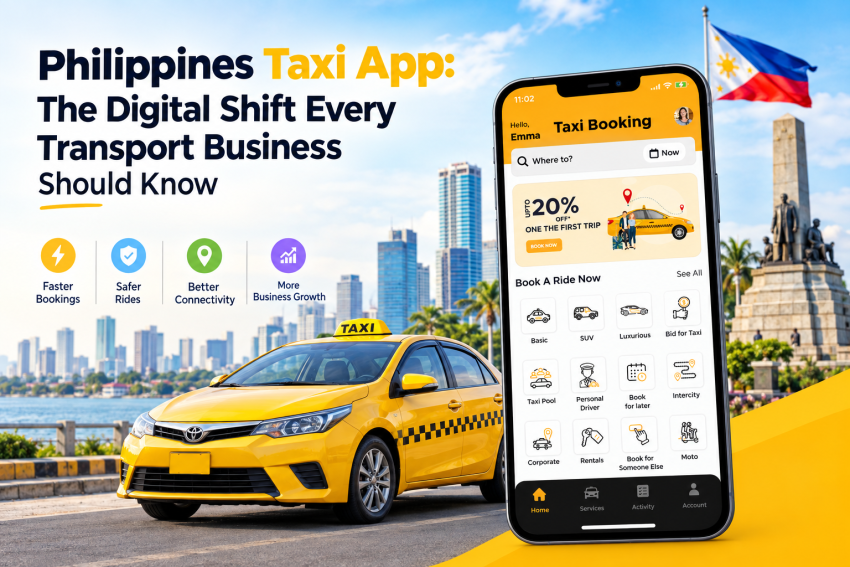
Today, it is not just an option for traditional taxi fleet owners to adopt a digitally upgraded Philippines taxi app.
You either embrace it with open arms or be a laggard in terms of this mandatory change. This is ultimately an upgrade for growth and survival for traditional taxi operators.
It all boils down to creating the best taxi app development in the Philippines that grows your business by manifolds.
In this blog, we will turn our attention to the way the digital shift in the Philippines can have major potential to change the face of the transport business for the better.
What Led to the Digital Shift in the Philippines Transport Business?
Now you might be wondering what the valid reasons are that led to the digital shift in the Philippines transport business. Here are some of the reasons.
An Undue Pressure to Adopt Digital Dispatch Software
Those taxi owners who are still using the traditional taxi booking system in the Philippines are facing tremendous pressure to use digital dispatch software.
The problem is that these taxi owners are not so tech-savvy, and it is extremely challenging for them to pay the higher hardware and software costs. There are certain taxi drivers who are not keen on adapting to the latest technology, which makes them fear the change.
Then there are older taxi drivers who do not have the digital skills to adapt themselves optimally using the software. These challenges, plus the top brands that are already in the taxi app market in the Philippines, put undue pressure on them to adapt to the digital dispatch software.
Extreme Traffic and Gaps in Infrastructure
Due to heavy traffic in various cities such as Cebu, Manila, and Davao, it becomes very challenging for the taxi drivers to get through. On top of that, there are certain gaps in infrastructure that have resulted in a lack of total digital transformation.
This is where it makes total sense to make use of a real-time GPS tracking system and agile routing to ensure that the taxi drivers can get to their destination on time using a standardized mapping system which shows real-time spots.
Increased Adoption of Smartphones and E-Wallet Penetration
The extent to which digitization has penetrated in the lives of Filipinos can be gauged from the fact that 67.3% of Filipinos who are 10 and above know how to use the internet in the year 2024.
This is equal to 61.46 million individuals, which widens the commuter base who are well-acquainted with booking a taxi. On top of this, Filipinos have also become savvy about using an e-wallet for payments.
With such smart adoption of technology, it totally makes sense to digitalize the transport business.
The Complete Support Shown by the Government
No matter how widespread the adoption of smart technology in the Philippines, it is challenging to achieve the right results if the Government in the Philippines does not support digitization. This is where things are on the right track in the country.
Thanks to the Land Transportation Franchising and Regulatory Board (LTFRB) and Public Transport Modernization initiatives, making effective use of taxi business apps has become easier than ever before.
With the complete backup from the government, the stage is perfectly set for budding entrepreneurs and businessmen to take advantage of this digital revolution and develop a ride-hailing app in the Philippines.
Quick Adoption of EVs for Eco-Friendly Positioning
The general awareness amongst Filipinos of eco-friendliness has opened doors for urban planning and electric vehicles (EVs). The green initiatives allow you to start a taxi business in the Philippines with a green initiative.
With the infrastructure in the country improving on a day-to-day basis, it makes sense to position your business as an eco-friendly initiative. This will help your taxi booking app in the Philippines get its due credit in the long run.
A Quick Addressal of Service Quality Gaps
Although there is competition when it comes to taxi booking in the Philippines, there are times when certain service quality gaps can turn off these riders. This includes high cancellation rates, long wait times, and a poor internet connection.
Unpredictable surge pricing, route deviations, in-person vs in-app discrepancies, app glitches, and no precise dispute resolution. All these service quality issues stem from insufficient driver pools in your cab booking system.
The best way to resolve this issue is to educate the drivers and help them understand the importance of closing these service quality gaps.
This is where a digital platform can come in handy to ensure that the riders do not face any inconvenience and that they can address their concerns on the platform itself.
How Does the Digital Shift Impact the Philippines Taxi App?
The digital shift has shown a positive surge in the Philippines taxi app. Here are some of them.
- When you use a taxi booking app such as an Uber clone app in the Philippines, one of the best digital taxi platforms in the Philippines, you do not have to wait for the ride. Simply fill in your preferred destination and the pick-up spot. Next, select the preferred vehicle type. The cab will be there at your pick-up location.
- One of the biggest changes that we are seeing thanks to digitalization is that riders can get lots of affordable options with complete transparency. The price you will get is more affordable than hiring a local cab.
- A thorough background check is run on the driver. They get real-time GPS information so that riders can get to their destination seamlessly. Riders can share their real-time ride location with family and friends for security reasons.
- Ever since Filipinos started to use technology effectively, cab owners with a fleet of taxis have required a number of drivers. By hiring them, a positive impact has been created in the country’s economy. It also helped them get a stable income.
The impact created by ride-hailing is not limited to the transportation industry; it has generated a flurry of growth in other industries such as insurance, mobile technology, and vehicle maintenance.
FAQs
Being an independent taxi fleet owner, can I launch my own app in the Philippines?
Absolutely! As a traditional taxi operator, you can develop a white-label taxi app. Alternatively, you can even affiliate with a reputable clone app development company such as V3Cube and develop an Uber clone in the Philippines.
By launching a proprietary app, local operators can retain the branding aspects, set localized rates within LTFRB limits, and avoid the chance of paying high commission rates to third-party tech companies.
How do taxi booking apps in the Philippines manage pricing?
Base Fare + per-kilometre and per-minute rates are the basic way pricing is done by taxi booking apps in the Philippines.
Another method is surge pricing, which is particularly used during heavy rainfall, high-demand periods, or peak hours. This method is used to lure the drivers to accept the rides during such unforeseen situations.
Others simply calculate a booking fee and the standard physical taxi meter.
How much money do I need to keep aside to acquire a taxi franchise in the Philippines?
You are required to pay a fee for a new LTFRB certificate of Public Convenience (CPC). Typically, a franchise will cost approximately ₱1,000 or less in the form of government fees.
However, if you wish to purchase an existing second-hand taxi franchise or a used taxi unit with an active franchise, you will have to spend between ₱150,000 and ₱300,000.
How much do I need to spend to develop a custom taxi app in the Philippines?
The precise answer can only be given if you provide the details of the extent of customization that you wish to make in the development of the custom taxi app in the Philippines.
However, as a starting point, you can get a custom app developed within a range of ₱500,000 if you are considering a basic white-label setup, to more than ₱300,000 for a custom-built platform consisting of advanced dispatch algorithms and local payment gateways.