Nigeria’s 42.5% youth unemployment is scary on paper. But let’s be honest, if lack of work was the real problem, our streets would be quiet. Instead, they’re buzzing. Bikes everywhere. Small shops on every corner. People selling, moving, delivering, fixing, cleaning, cooking.
The energy is there. The hunger is there.
What’s missing is structure.
Think of it like this:
People are ready to run, but there’s no proper track.
Everyone is sprinting on sand.
Formal jobs are limited. Government hiring can’t keep up. Big companies can’t absorb millions of young people every year. So people create their own work. The only problem, they do it alone, without systems, without reach, without predictable income.
That’s where platforms come in.
Not charity. Not motivation speeches.
Platforms.
When you build the right digital marketplace, you don’t create jobs, you unlock earning paths that already exist. And this is exactly why the idea of launching a Gojek Clone in Nigeria makes sense right now.
Nigeria’s Market in Short
Let’s talk reality, not theory.
Nigeria is ready. Not “almost ready”. Ready!
Here’s why.
1. The infrastructure is already standing
- You’re not building on empty land.
- Over 107 million internet users
- Smartphone penetration above 50%
- Broadband improving year after year, especially in cities
In simple words: people know how to use apps. WhatsApp, banking apps, delivery apps, they’re already part of daily life.
2. Demand is proven, money is already moving
This isn’t a “future market”.
- Food delivery is already a billion dollar space
- Logistics and courier services touch $15 billion
- Drivers on good platforms earn serious money, some touching ₦1M–₦1.6M per month
People are paying. Vendors are selling. Riders are earning.
3. But the market has cracks
This is where opportunity lives.
- Smaller cities are ignored
- Trust matters more than cheap pricing
- Hyperlocal needs are poorly served
A customer would rather wait 5 extra minutes for a delivery they trust.
A driver would rather earn slightly less with predictable payouts.
A shop owner wants visibility, not fancy dashboards.
The market doesn’t want perfection.
It wants reliability.
The Solution: White-Label Gojek Clone
Let’s remove the buzzwords.
Gojek started in Indonesia and grew to over 190 million users because it understood one thing very well. People don’t live single-service lives.
- Today I need a ride.
- Tomorrow I need groceries.
- Next week I need a plumber.
For Nigeria, this unique Multi-Service App module fits perfectly.
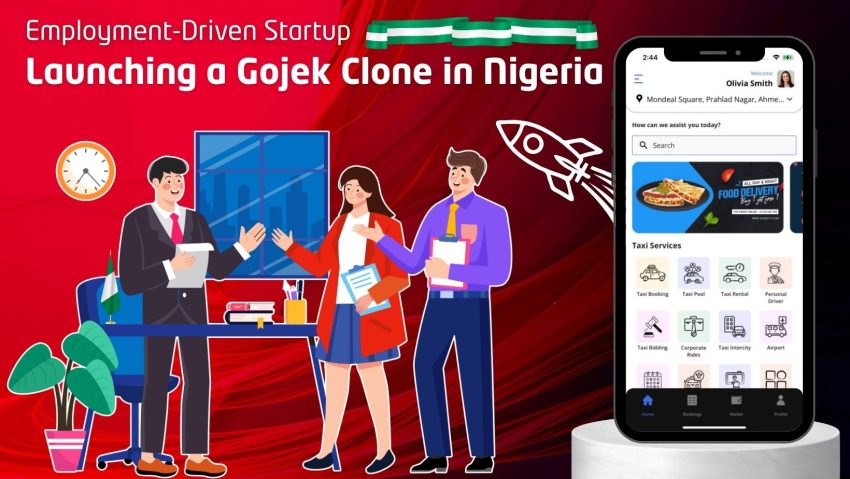
A Gojek-style app is simply one app that solves many daily problems.
Instead of asking users to download five different apps, you give them one familiar place to:
- Move around
- Order food
- Send parcels
- Hire services
- Buy or sell locally
If you think, “why White-Label only?” Follow the read.
Why White-Label Makes Sense
Building from scratch sounds cool until reality hits.
Custom App Development means:
- 12–18 months of build time
- Huge engineering cost
- Endless bugs and delays
Risk of building something nobody wants
White-label is different.
Think of it like buying a fully built shop and branding it as your own. The engine is tested. The flow works. You customise it for Nigeria and launch.
A White-Label Gojek Clone Script Nigeria gives you speed, safety, and focus.
14 Components in Gojek Clone: The Ultimate Growth Factor
A good multi-service app succeeds because it fits into daily life. These 14 components are not fancy extras. They are everyday problem solvers.
1. Taxi Booking
Book bikes, cars, or taxis with clear pricing and live tracking. No roadside arguments. Drivers get steady trips, users get predictability.
2. Parcel Delivery
Documents, groceries, forgotten items. Single or multiple stops. This turns riders into flexible couriers instantly.
3. Store Deliveries
Local stores sell groceries, medicines, water cans, gas, and fruits. Shops get more orders. Customers save time.
4. On-Demand Services
Electricians, cleaners, plumbers, beauticians, tutors. Book skilled help like booking a ride. Simple and trusted.
5. Delivery Genie and Runner
Need someone to queue, pick up, drop off, or handle errands? Hire a runner and track everything live.
6. Online Video Consultation
Tutors, consultants, fitness trainers offer paid video sessions inside the app. Knowledge becomes a service.
7. Bid for Services in Real Time
Users post a task. Providers bid. Best price and availability wins. Transparent and competitive.
8. Buy, Sell and Rent Real Estate
List properties directly. Buyers browse. Agents get leads. Less middleman drama.
9. Buy, Sell and Rent Cars
Car owners list vehicles. Buyers explore options. The app becomes a trusted auto marketplace.
10. Buy, Sell and Rent General Items
Furniture, electronics, appliances, household items. A digital local market inside the app.
11. Car Pool and Car Share
Share rides, split costs, reduce travel expenses. Ideal for office routes and long trips.
12. Medical Services
Doctor consultations, ambulance booking, diagnostics, and physiotherapy. Speed and access matter here.
13. Track Family and Employees
With consent, track movements for safety and coordination. Useful for families and businesses.
14. Nearby Businesses
Discover restaurants, salons, gyms, cafes, stores nearby. Local businesses get visibility without heavy ads.
The simple logic here is powerful.
More services mean more reasons to open the app.
More usage means better retention.
Better retention means stable revenue.
How Does Money Flows In Gojek Clone?
Let’s keep this practical.
A multi-service app doesn’t rely on one income stream. It spreads risk.
Common revenue channels include:
- Commission on every completed order
- Subscription plans for service providers
- In-app advertising and promoted listings
- Surge pricing during peak demand
- Sponsored slots in buy, sell, and rent sections
This diversity keeps the business healthy even when one service slows down. Multiple streams mean you’re not dependent on one thing. That’s business safety.
Problems in Execution, Solved with One Smart Admin Panel
Now the honest part.
This is not a magic button.
You’ll face:
- Infrastructure differences across regions
- Trust issues with new users
- Regulatory grey areas
- Competition in major cities
How founders win is simple!
They focus on reliability over discounts, customise locally and build trust slowly. They start where others ignore and listen to users more than spreadsheets.
White-label platforms help here because they provide an Admin Panel which lets let you test quickly and adapt without burning time and money.
Conclusion
Nigeria doesn’t need more ideas.
It needs better platforms.
The infrastructure is ready.
The people are ready.
The model is proven.
If you’re serious about launching a Gojek Clone in Nigeria, start smart. Explore a white-label solution. See a live demo. Ask for a custom quote. Run a small pilot. Learn. Then scale.
Choose a partner that gives you licensed code, transparent support, and real experience. That difference decides whether your app becomes another download, or a daily habit.